A Year of Redemption, But Risks Remain
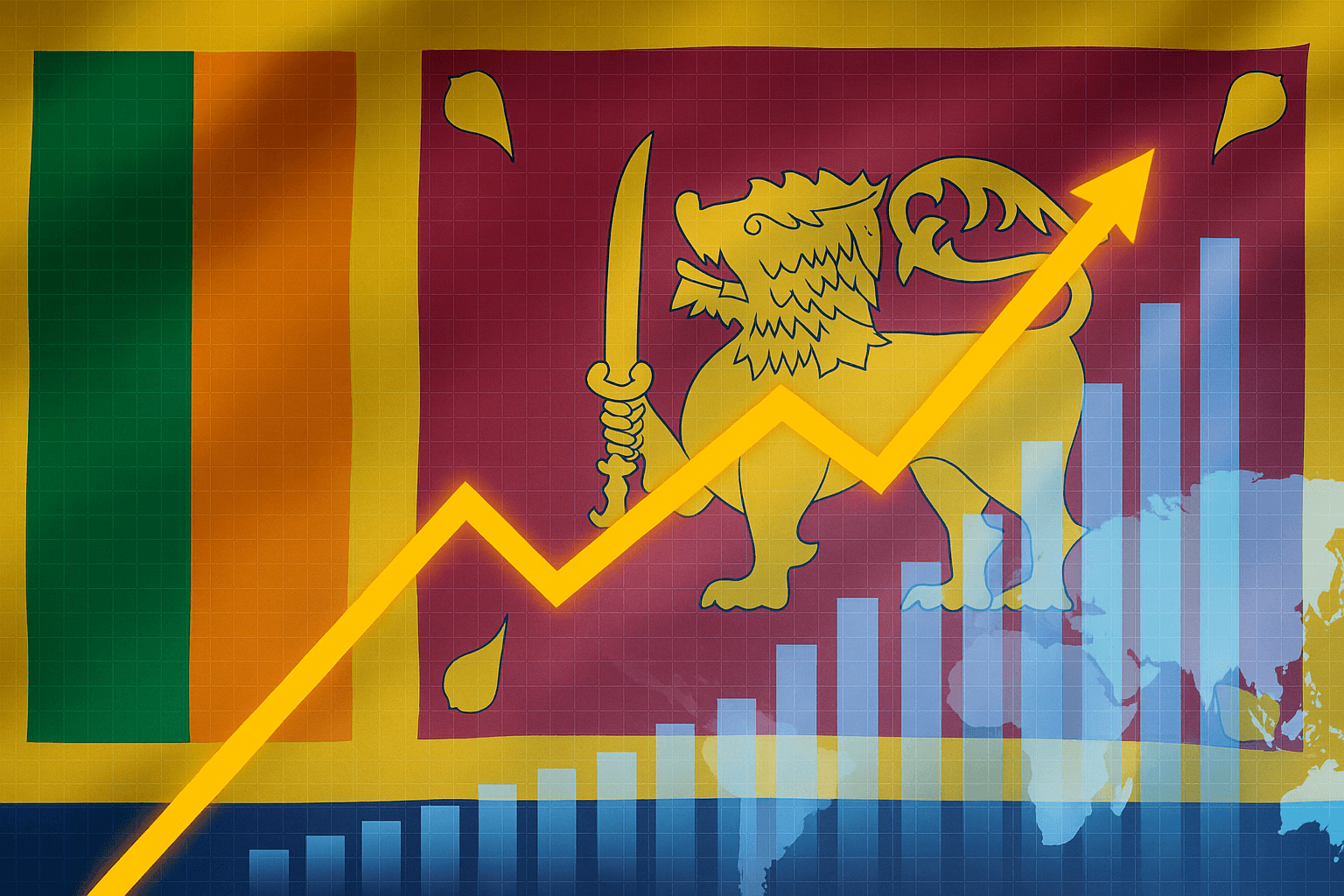
Two years before, Sri Lanka was a country in crisis. Harmed by barren reserves, debilitating inflation, and street protests, the government was balanced on the brink of economic, even political, disaster. Frustration and hunger lined the streets, while institutions of the state crumbled under dysfunction and mistrust. That current was turned about at the end of 2024 when Anura Kumara Dissanayake became president, promising reform, openness, and justice. Enjoying broad public support and a parliamentary supermajority, his government quickly approached international lenders, re-established fundamental services, and began planning a sustainable recovery.
Yet, despite visible improvements, Sri Lanka’s economic landscape remains fragile. Key sectors, tourism, remittances, and apparel exports, are still vulnerable to external shocks. Inflation, though improved, continues to affect lower-income families. While the government has taken significant steps toward stabilisation, the road ahead demands deeper structural reforms, better debt management, and robust social protection systems. Political momentum may be on their side, but public expectations are rising. The next phase is not about emergency response, it’s about proving that lasting transformation is possible. Redemption has begun, but whether it will endure is the question that now defines the moment.
IMF Reaffirms Commitment with Fourth Review
On July 2, 2025, the International Monetary Fund finished the fourth review of Sri Lanka’s Extended Fund Facility (EFF), freeing a new disbursement of SDR 254 million, or approximately USD 350 million. The IMF praised the government for achieving primary targets, including energy subsidy rationalisation, revenue mobilisation through taxation, and progress towards restructuring public enterprises. The positive review indicates increasing confidence towards the policy course of the administration and a more stable macroeconomic environment. As stated by the IMF, the real GDP of Sri Lanka is estimated to increase by 3.5% during 2025, after a healthy 5% recovery during 2024.
Nevertheless, the IMF issued a warning. It cautioned that Sri Lanka’s economic achievement is vulnerable to external volatile forces, such as geopolitical conflict and disruptions linked to trade. Replacing a 30% U.S. tariff on apparel was cited as a critical external risk, especially for jobs and foreign exchange. Domestic poverty rates, remaining above 25%, also challenge inclusive development. The IMF has urged authorities to be more robust on targeted welfare, conclude debt restructuring negotiations, and forgo policy reversals. For the moment, the disbursement provides a financial cushion and reputational boost, but the focus remains firmly on implementation. Sri Lanka is closely observed, not only for what is promised, but for what is delivered.
Central Bank Maintains Course Despite Shift In Inflation
The Central Bank of Sri Lanka (CBSL) left policy interest rates unchanged in July 2025, standing firm after 225 basis points of reductions. It reflected a policy of cautious optimism: headline inflation displayed a hint of stabilisation, shifting from –0.6% in June towards moderately positive ground, with a prognosis that it would stabilise near 5% through the end of the year. Governor Nandalal Weerasing reiterated that a boost to economic recovery was necessary without stoking a return of inflation. Still, he continued to watch for external shocks alongside internal credit flows.
In tandem with its financial approach, CBSL is upgrading the country’s financial infrastructure. The re-launch of LankaQR and the development of GovPay are broadening digital channels of transactions and formalising economic activity. Yet, foreign reserves are modest at about USD 6.5 billion, underscoring the imperative of cautious policy management. The central bank has also established stricter regulatory control of financial institutions to avert liquidity risks. This multifaceted approach, entwining stability with innovation, befits the new needs of a transforming economy. Yet, achievement will be a function of the monetary policy being calibrated with fiscal restraint, investment flows, and political stability. Time that the CBSL’s caution purchases, though, does not mean immunity from pressure.
Apparel Shock: U.S. Tariff Threatens Recovery
Sri Lanka’s garment sector, the pillar of the country’s export economy, receives a decisive blow: a 30% import duty from the USA, starting August 1, 2025. The sector, which contributes nearly 40% of total exports, employs over 300,000, mostly women, and is gearing up for cancellations of orders, closures of factories, and redundancies of labour forces. Industry officials from the Joint Apparel Association Forum (JAAF) termed the move “a major setback” and are appealing to the government to initiate rapid diplomacy with Washington to seek an exemption or changed terms.
The government has formed an emergency task force, including trade, foreign affairs, and central bank representatives. Measures under consideration include direct wage support for affected workers, diversification to non-U.S. markets, and accelerated digitalisation for small apparel producers. President Dissanayake has also initiated high-level dialogue with regional allies to explore tariff-mitigation alliances. The World Bank and the IMF have acknowledged the tariff as destabilising, recommending a targeted response to prevent economic displacement. This development is a trade issue and a social and economic flashpoint. How the government handles this could determine whether public confidence in the recovery endures or unravels.
Green Growth: Multilateral Assistance Gains Strength
With a significant push from multilateral institutions, Sri Lanka’s turn towards a greener economy is gaining momentum. In June 2025, the World Bank sanctioned USD 150 million for renewable energy projects, specifically solar and wind energy. This programme will install up to 1 GW of new capacity through 2030, including USD 800 million of intended private-sector co-investments. These projects are concentrated on the dry regions of the North Central and Eastern provinces, where the wind and sunshine create ideal conditions for scalable clean energy. These initiatives support wider government plans to decrease fossil fuel reliance and increase climate resilience.
Simultaneously, a USD 1 billion World Bank economic resilience package, sanctioned this year, finances modernisation of infrastructure, rehabilitation of SMEs, tourism recovery, and sustainable agricultural development. These investments are more than a stimulus, proclaiming a strategic shift towards sustainability. Governments are also digitising financial services through programs such as GovPay and LankaQR, enabling speedy, transparent public transactions. Critics are, however, prudent, given limitations in implementation capacity, especially for the countryside. Nonetheless, if it persists, this twin-track green and digital approach could set Sri Lanka on course for a regional model of post-crisis, climate-resilient development.
Trust in Government: Up, but Pressure Grows
There is greater public confidence today in the functioning of the current government since President Anura Kumara Dissanayake became President. According to the February 2025 “Mood of the Nation” survey conducted by Verité Research, government approval ratings increased from 24% in July 2024 to 62%, while disapproval fell from 60% to 16%. These statistics reflect widespread public support for anti-corruption action, budgetary discipline, and greater transparency from the government. Initial successes, such as minimised ministerial privileges, prominent asset investigations, and direct citizen participation, have helped reorient the tone of government.
But rising expectations mean rising pressure. Performance exceeding perception, not perception itself, is the task for the new government: affordable cost of living, youth employment, and balanced regional development. The recent U.S. quota tariff on clothing exports threatens export earnings and public sentiment, mainly among working-class households. In addition, despite growing digital services, coverage is sketchy for the rural-urban segments. The government now tightrope-walks, reconciling high demand from citizens with plausible timelines for delivery. Confidence may deepen and endure for a long time if it comes through. If not, available political capital may evaporate quickly. As Sri Lanka learns a lesson from past failures, public confidence may be its hardest-won but most-needed currency.
The Final Pulse
As we move through July 2025, Sri Lanka finds itself in a historic inflexion point: beyond the lowest ebb but through the uncertain. President Dissanayake’s reformist leadership restored macroeconomic stability, re-engaged international partners, and instilled tentative optimism among citizens. However, structural weaknesses remain bare, from export concentration to social disparity. The apparel tariff shock is a reminder that recovery is not exempt from external turbulence. The country’s actions in the following 90 days may condition the subsequent nine.
This is not just about fiscal policies, foreign loans, political endurance, institutional credibility, and social resilience. Sri Lanka now has a window of opportunity to forge a sustainable and inclusive path. If handled well, it could be a shining example of democratic restoration for the Global South. If handled imprudently, it could repeat the volatility cycles it has struggled to break free of. At PEOPLENEWS, we’ll keep reporting every turn, every challenge, every promise of progress, because what happens now will determine Sri Lanka’s future and provide a lesson for others seeking a way through the storm.