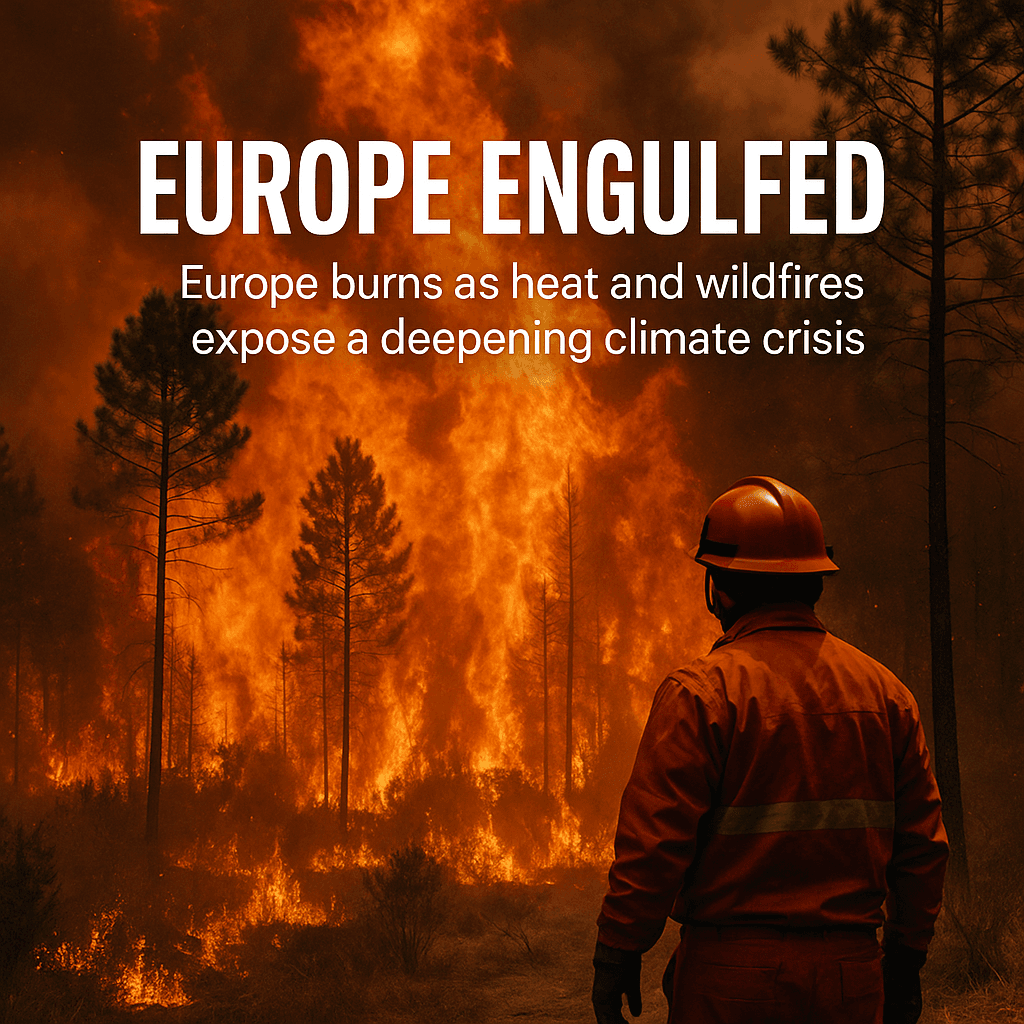
ROME – Europe is gripped by double tragedy as rampant wildfires and intense heatwave lay waste to the continent, shattering temperature records and straining emergency responders. Across Europe, from Spain to Turkey, evacuation of the thousands has been needed, infrastructure is strained, and governments are mobilizing to respond to what experts are calling a “climate emergency in real time.”
Wildfires Span International Borders
During the past week, there were wildfires across France, Greece, Spain, Turkey, Italy, and the United Kingdom, destroying tens of thousands of hectares of agricultural land and forests. More than 57,500 people have had to evacuate as six have died and over 100 have been hurt so far.
In southern Turkey, conflagrations that had engulfed entire villages have been contained as firemen and military helicopters labored around the clock. Evacuation of sections of the Peloponnese in Greece has also occurred, where officials have warned that bursts of wind could exacerbate the situation.
Meanwhile, France has also declared national emergency as fires around the Gironde region reignited, triggering mass evacuations. In the United Kingdom, emergency services report that the year has already topped the country’s annual wildfire count—by July.
Europe-wide Sizzling Weather Break
They came as Europe is going through its most scorching heatwave for several decades. As indicated by weather agencies:
• Spain reached temperatures above 46°C in many interior cities.
• Germany experienced several days of highs of more than 40°C, impacting power stations and water supplies.
• It also became England’s hottest June since 1884, and July broke many records.
Doctors have witnessed a explosion of heat illnesses, primarily among the elderly, and hospitals are overwhelmed. Crops across Southern Europe are turning brown, and drought is threatening the agricultural security of the region.
Political Reaction and Declaration of Emergency
Governments are responding rapidly. France, Germany, and Greece have activated whole emergency response plans. French President Emmanuel Macron has toured affected neighborhoods struck by fires and has called for Europe to have a unified wildfire defense policy. German Chancellor Annalena Baerbock has pledged €1 billion for modernizing firefighting gear and for climate adaptation.
The EU Civil Protection Mechanism has been triggered, enabling nations to exchange planes, staff, and emergency funds. International aid is also on the increase, as there have been offers of help from Canada, America, and Japan.
A Global Climate Warning
Scientists explain that these fires are not only natural disasters but are the direct results of the rapid change of the climate. As stated by the European Environment Agency (EEA), summer temperature averages across Europe have risen by over 2.2°C since 1950, and intense and frequent extreme weather events have become commonplace.
“This is not an anomaly —it is the new norm,” replied Dr. Elena Schwarz, climate systems analyst for the European Climate Observatory. “Unless there is rapid, collective global action, these events will only become more frequent and intense.”
Today, the United Nations released a statement citing the European fires as “a global red flag” and urging governments worldwide to raise spending on climate mitigation, resilience, and reforestation.
What is Next?
While fire departments grapple to contain the blazes and individuals seek shelter from the flames, Europe has questions about its infrastructure, energy resilience, and environmental preparedness. As the month of August promises to bring sustained heat and drought, individuals are already bracing for an extremely long summer.
Leaders warn that without stronger climate policies and investment in sustainable land management, the cycle of destruction is set to recur. For now, the focus is saving life and preventing the fires from taking more.
Summary
• 57,500+ people evacuated throughout Europe
• Six confirmed deaths and widespread property loss
• Record-breaking warmth throughout Spain, Germany, and the United Kingdom
• Governments of Europe declare emergencies and start crisis aid
• UN calls for climate action immediately as the wildfires keep burning.